Monday, March 28, 2011

Heidis_Extra Credit Post #1

“An animated sitcom featuring a crew of four potty-mouthed kids” (Jones 8) becomes the controversy on NPR:

southpark_wide.jpg

AUDIO CLIP

Matt Stone and Trey Parker wrote and directed a black comedy called Cannibal! The Musical. A Fox executive saw the film and commissioned the duo to create an animated short.Finding a way to sneak black-market arms trading into a cartoon about fourth-graders from Colorado wasn't exactly a challenge: For Eric Cartman-South Park's resident racist, anti-semitic, power-hungrey sociopath- gun running is a more likely after-school job than a paper route. Sure enough, a promo for South Park's 14th season showed Cartman signing for a shipment of 500 AK-47's. Playing off topical events, explains Parker, is something that South Park writers try to do on a weekly basis.

This Audio Clip discusses Matt Stone and Try Parkers’ use of characters/kids to get their points across. The question is; are they able to get away with more if a cartoon says something rather than if a real person or adult?So here is my question, do you (Dr. Gournelos or any classmates) agree or disagree with this? Do you think they are using these kids as a scapegoat to make ridiculous clams or in doing this they are saying things that need to be said?Although this seems to a big controversy, in my opinion I am not sure that I agree with this.


Saturday, March 26, 2011

Extra Credit Post

In our readings of chapter 1 and 2 in our book "Entertaining Politics" Jefrey Jones argues how the boundaries between politics and entertainment are increasingly blurred. Popular media outlets discovered that political content could be its hottest commodity. Furthermore popular culture has become one of the more open and free-flowing arenas for communication about politics.
Politics is now packaged in a variety of formats and genres beyond news and documentary, including talk shows, dramas, sitcomes, sketch comedy and as mentioned by Jones as well is fake news. When I read 'fake news' I right away thought of 'theonion.com'. TheOnion lives off of fake news and none of what they report is actually true - yet they are given out messages in different ways. Or such as ComedyCentral slogan says it "same news different take". Politics is drama, and as such has always had entertainment value for individuals, communities, and the nation (Jones 14). Jones further states that politics is increasingly crafted through and for media spectatorship, and hence the desired separation between media and politics is no longer possible. Whether we like it or not whether "theonion" or fake newsmagazines, they all demonstrate the power of "fake" as a way of reflecting upon the real.
Below is a clip from "theonion.com" that discusses how Obama does not like his dog, Bo. As a viewer I wonder, why would people even waste their time showing fake news? After reading Jones chapters it becomes a bit more clear - political issues, whether fake or real (as long as they have some kind of connection to the 'real' world) are entertaining or anyways have become entertaining.


Obama Denies Accusations He Does Not Love His Dog

"Theonion" has a tone of advertisement on its website and it is making a good business for reporting fake news. Plus people are obviously interested in it because "theonion" is making its own political statement by making fake political statements and through mocking possible real life happenings.

Under popular culture we could also include advertisements that make political statements I believe. This is why I also included a video on youtube put together of Benetton ads and other clothing companies that make a political statement to promote their brand.


In this video none of the ads of the clothing companies are merely just focusing on their clothing but are making a statement to get viewers attention. Jones notes that "Citizens often 'discover' their political views in the give-and-take of discussion with others" (29). These ads of clothing companies are very popular and so of course it becomes discussion in our day-to-day lives. Through discussion we come to see our political views on things - and then either agree or disagree with the popular cultures portrayal irrelevant from what 'real news media' might tell us. These ads as well as other popular culture thus is just as capable of shaping and supporting a culture of citizenship as it is of shaping and supporting a culture of consumption (39).

Wednesday, March 16, 2011

Additional Post

Communities for a Better Environment (CBE) is a social justice organization with a focus on environmental health and justice. This organization works mainly with working class communities of color in Northern and Southern California. CBE has chosen to deal with these specific communities because they are the areas that suffer the most from pollution and harmful toxins. These groups are effected daily by pollution from freeways, power plants, oil refineries, seaports, airports, and chemical manufacturers. As a result, the people within these communities endure high rates of respiratory illnesses such as asthma, heart problems, cancer, low birthrate, and miscarriages. Due to the severe rate of poverty in these areas, these health conditions are raised even higher. CBE not only assists in improving these conditions, but also challenges residents to identify their own problems and create their own campaigns and solutions.

Toxic tours are major ways in which they are spreading awareness. These visits include trips to refineries, chemical sites, and fields located in Northern California and Los Angeles. During these tours the guide will provide you with stories of current struggles within the area, as well as, an explanation of government officials responsible for the poor conditions.

By experiencing the conditions of these poor ethnic communities firsthand, one is able to truly place themselves in the shoes of those in danger. Unlike reading some story on a website, the CBE toxic tours provide a realness. While I believe that the tours are very effective at creating awareness, taking actions towards finding solutions is just as important. It is clear that the CBE organization has done both. By helping the residents acquire legal assistance and scientific/ policy research, CBE successfully creates action as well as awareness.


http://www.cbecal.org/index.html

Quiz #3-Clear Water Conservancy

Clear Water Conservancy of Central Pennsylvania is a Centre County based land trust and natural resource conservation organization formed in 1980. Their overall mission is to promote conservation and restoration of natural resources in central Pennsylvania through land conservation, water resource protection, and environmental outreach to the community. In the book 'Toxic Tourism,' it is clear that the main purpose of the tours are about raising awareness. While the organization is very concerned with providing awareness about environmental conservation, they also provide opportunities for civilians in the area to come together and see firsthand changes being made. One project that people in the area can get involved in is through their Riparian Conservation Program or the "Restoration Crew.” This involves planting native trees and shrubs, removing invasive species, etc. While this Conservancy may not be categorized as a ‘toxic tour’ per say, the efforts and hard work being done brings the community together from various areas to ensure the land never falls into the category of ‘toxic.’ While the website does display a section expecting donations, I still believe their main concern is the preservation of the water and land. In 2009, the committee launched a five-year fundraising campaign called 'Operation Conservation' in order to help achieve the organization’s conservation, restoration, and education goals. Their objective is to raise $500,000 from major donors and concerned citizens.


http://www.clearwaterconservancy.org/index.htm

Quiz 5 - Additional Post - Landfills

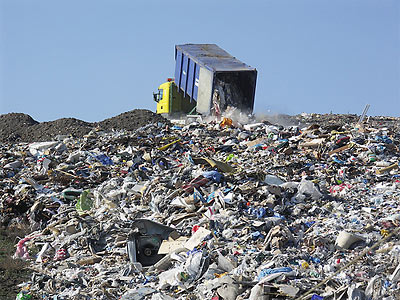
There truly is no way to reach a "zero waste" society because it is not environmentally or economically feasible. That being said, landfills, which are our primary waste disposal methods, cause some serious problems for their surrounding environment. For one thing, the emissions to the atmosphere are problematic, because they release high amounts of dust, aerosols and potentially toxic gases. Also, because many landfills reside on top of some sort of water supply, it seeps down and creates potential issues with the water. A somewhat indirect consequence is that 80% of the total waste ends up being dumped into the oceans anyway, which is a pretty staggering statistic. The ocean is incredibly vast, sure, but dumping all that waste will have long-term effects that will manifest at some point during our existence. It's hard to imagine alternatives to landfills, though, because not everything can be recycled or composted. We can't make waste disappear, so technically there is not much we can do at this point to eliminate the problem. People that live near landfills may complain about the odor, but how could we make people care about this problem? The solution is out there somewhere, but it may be economically and technologically way down the road.


More than Raising Awareness

Ultimately, the message of the Toxic Tourism book was for these "toxic tours" to do more than just raise awareness of a pressing and oftentimes harmful truth about a specific environment. Yes, raising awareness is the first step in any issue that is to be addressed, but what good is raising awareness when nothing is done after the awareness is raised? This reminds me of the comment that Nate made about his Toxic Tour experience that he had last year. They went to the site, they learned of the damage that had been done, but after that, they simply left with that knowledge, but did nothing to actually help the cause, which makes you ask yourself why you even went there in the first place. This truly reminds me of our final capstone projects. For me, I feel as if raising awareness about pregnancy discrimination is useful, yet very easy. It does not take much to throw together a few eye-popping statistics to raise that awareness. (Which is important) But I think the goal is to not only raise awareness, but inspire change. Now, that is not going to be so easy with both a male population that physically cannot get pregnant and young college students who hopefully will not be having children any time soon, but I guess what I am trying to say is I want people to watch my video, and not necessarily inspire change, but I want them to be moved and in some way effected by it, which is, in essence, what a good toxic tour should do. The video I have shown on this post does exactly what a serious problem, like a drought, should not do. The person speaking is simply throwing out a bunch of alarming statistics, but not once does he offer a solution. What good is that?


Tuesday, March 15, 2011

Envt Campaign- B.E.A.C.H. #3


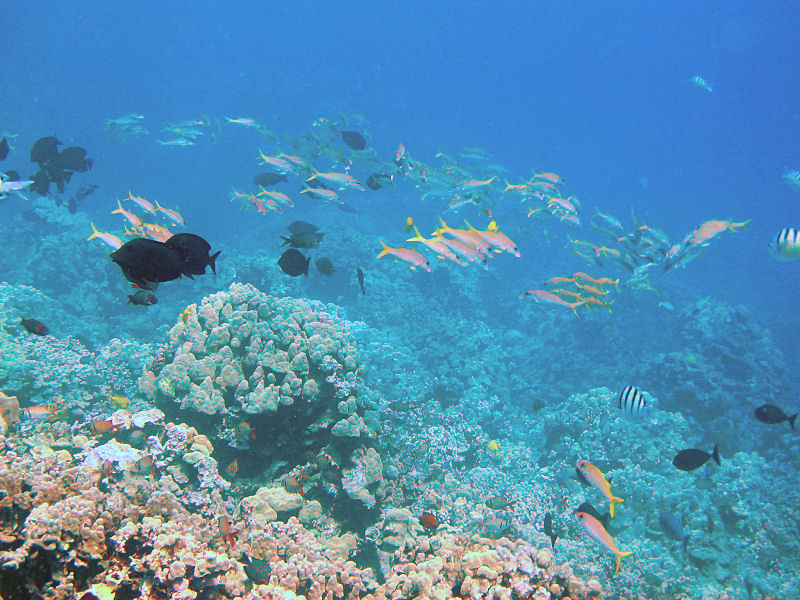
#3. The environmental campaign that I am going to evaluate is called the B.E.A.C.H., or the Beach environmental awareness campaign Hawaii. Basically, this organization is a non-profit entity that raises awareness and offers some solutions to combat the problem of debris that is found on many of the Hawaiian beaches. I think it is definitely a step in the right direction that the organization is actually offering up solutions as opposed to just raising awareness, but what I am going to focus on is how the website is constructed aesthetically, which essentially constructs an imagined community, which Toxic Tourism frowns upon and discourages. One need not even read the description of the organization to get a sense of the fact that this so called organization seems more pleasurable and vacation-like than anything else. Beautiful blue water and sea creatures splash right across the top of the page, and right away, at least in my opinion, I get the impression that this is more of a vacation website than an organization fighting for the lives of these animals. It almost has a seaworld feel to it, where the animals are to be looked at, rather than helped. Right off the bat this goes against one of the aspects of effectiveness that is talked about in Toxic Tourism. Instead, the website should be less touristy looking and more geared towards sharing the pain of others, in this case, the others being the animals,rather than glorifying their image. Hence, an imagined community is formed. The image up top is almost a spitting image of the one that is displayed across the webpage for the Hawaiian organization.


http://www.letsgo-hawaii.com/captcook/captcook1206_47b8.jpg

Quiz 5: Additional Post


Study: Most Plastics Leach Hormone-Like Chemicals
by JON HAMILTON

March 2, 2011

Most plastic products, from sippy cups to food wraps, can release chemicals that act like the sex hormone estrogen, according to a study in Environmental Health Perspectives.

The study found these chemicals even in products that didn't contain BPA, a compound in certain plastics that's been widely criticized because it mimics estrogen.

Many plastic products are now marketed as BPA-free, and manufacturers have begun substituting other chemicals whose effects aren't as well known.

But it's still unclear whether people are being harmed by BPA or any other so-called estrogenic chemicals in plastics. Most studies of health effects have been done in mice and rats.

The new study doesn't look at health risks. It simply asks whether common plastic products release estrogen-like chemicals other than BPA.

The researchers bought more than 450 plastic items from stores including Walmart and Whole Foods. They chose products designed to come in contact with food — things like baby bottles, deli packaging and flexible bags, says George Bittner, one of the study's authors and a professor of biology at the University of Texas, Austin.

Then CertiChem, a testing company founded by Bittner, chopped up pieces of each product and soaked them in either saltwater or alcohol to see what came out.

The testing showed that more than 70 percent of the products released chemicals that acted like estrogen. And that was before they exposed the stuff to real-world conditions: simulated sunlight, dishwashing and microwaving, Bittner says.

"Then, you greatly increase the probability that you're going to get chemicals having estrogenic activity released," he says, adding that more than 95 percent of the products tested positive after undergoing this sort of stress.

But what about all those products marketed as BPA-free? That's a claim being made for everything from dog bowls to bento boxes these days.

The team concentrated on BPA-free baby bottles and water bottles, Bittner says, "and all of them released chemicals having estrogenic activity." Sometimes the BPA-free products had even more activity than products known to contain BPA.

The testing didn't show which chemicals are to blame, which is likely to be frustrating to manufacturers.

But Bittner says consumers should be encouraged that at least some plastic products had no estrogen-like activity. He says that shows it is possible to make these products.

Early reaction to the study was mixed. Some scientists wondered about the test's reliability. Others noted that wine and many vegetables also can act like estrogen. And a few observed that Bittner has a financial interest in the testing lab and in a company involved in making plastic products that don't release estrogenic chemicals.

On the other hand, groups that have warned about the potential dangers of BPA in the past seemed to welcome the new research.

"This is really helpful because they took a look at very common products," says Sonya Lunder, a senior analyst at the Environmental Working Group.

But the results suggest that concerns about plastics can't be solved by worried consumers at the checkout counter, Lunder says. It's a problem for government, she says.

"Regulatory agencies need to study the effect of chemicals leaching out of plastic," Lunder says, adding that an EPA program formed more than a decade ago to do this sort of research still hasn't produced many results.

Until scientists come up with more definitive answers, Lunder says, worried consumers can follow the old advice to avoid putting those baby bottles and other plastic products in dishwashers or microwaves.

"We've long cautioned consumers to avoid extreme heat and cooling for plastics, to discard scratched and worn plastics and we feel like this [study] validates one of our many concerns," she says.

-------------------------------------------------------------------------------------

(Article and Picture from http://www.npr.org/2011/03/02/134196209/study-most-plastics-leach-hormone-like-chemicals)

-------------------------------------------------------------------------------------

I vaguely remember the topic of BPA coming up in class a while ago. I thought that this article was interesting. I also, followed some links on the NPR webpage and found a brand of water bottle called PlastiPure. Their website employs rhetoric that is similar to that of a toxic tour in order to sell their protects. According to their website, one goal of PlastiPure is to educate "consumers on the facts about estrogenic activity (EA) by working directly with the scientific community, non-governmental organizations, consumer groups, legislators, and the media."

(http://plastipure.com/about)

Brian Goldenberg

Intervention -- Official Chernobyl Tours


12:11 21/01/2011
RIA Novosti commentator Marina Selina

Can Chernobyl become a popular tourist destination? The Ukrainian government thinks so. It plans to offer regular tours to Chernobyl, and hopes to attract more than just extreme tourists looking for an adventure. Eschatologists and anyone longing for a taste of the Soviet past are also welcome.

Ukrainian tour operators are anticipating a healthy flow of tourists, but it is too early to tell if this notorious disaster site has the makings of tourist attraction. Many questions remain. Can visitors' safety be guaranteed? Will the massive investments needed in infrastructure materialize? While we wait for those answers, nature is gradually reclaiming this impressive site where time stood still.

Chernobyl's prospects
Those who visit Chernobyl today say it's like travelling back in time. Within a few hours of the explosion at the Chernobyl nuclear plant in April 1986, the government evacuated all 50,000 residents of the neighboring town of Pripyat. The abandoned streets, schools, and Soviet-era department stores have remained intact in the intervening 25 years. Tour operators expect that this ghost town frozen in time and the wreckage of the reactor encased in a concrete sarcophagus will make an indelible impression on tourists.

Tourism in Chernobyl is not an entirely novel ideal; several tour operators already offer excursions to the area. But now it has attracted the attention of the government, and that could make a huge difference.

Last December, Ukraine's emergencies minister, Viktor Baloga, who accompanied Helen Clark, chief of the UN Development Program, on her visit to Chernobyl, proposed that regular tours to Chernobyl begin in January 2011. Ms. Clark supported the idea, seeing it as an excellent opportunity to raise awareness of the tragedy and of the importance of nuclear safety. She could see the economic potential of Chernobyl despite - or because of - its bleak history.

The UN official does have a point. In 2009, Forbes rated Chernobyl the world's most exotic tourist destination. It drew some 7,000 visitors that year.
As the host of the 2012 UEFA European Football Championship, Ukraine is preparing for an influx of international tourists. It is these tourists that Ukraine hopes to entice with trips to Chernobyl.

Ukrainians themselves have little interest in visiting the disaster site. "The majority of people here are more concerned about practical issues, such as benefits for the rescuers and the victims of the accident," says Ukrainian political analyst Alexei Poltorakov, who sees foreigners and young people who are into extreme tourism as the target market.

-------------------------------------------------------------------------------------

(Article and Picture from http://en.rian.ru/analysis/20110121/162233898.html)

-------------------------------------------------------------------------------------

Toxic tours of Chernobyl have the potential to make tourists aware of the importance of nuclear safety by providing visitors a first hand encounter with Chernobyl, the most striking example of nuclear energy gone wrong. Unfortunately, based on the description of the article, I am inclined to believe that the main reason that the Ukrainian government put together an official Chernobyl tour was to generate profit for the region. As a result, the Chernobyl disaster is exoticized as an eerie relic from the Soviet Union of old. Exoticizing Chernobyl is exactly the opposite of what Pezzullo would recommend. Rather than constructing an imagined community to whom visitors can identify, exoticizing these events causes visitors to disassociate. One way to remedy these issues is by appointing tour guides who are Chernobyl survivors. This would allow the tragedy of Chernobly to be told from the perspective of a personally narrative, rather than as an historical event.

Brian Goldenberg

Quiz #4- Related to TT

I recently watched The Cove and was very moved by the work of Louie Psihoyos and his team in exposing the dolphin massacre that is taking place in Japan. Toxic Tourism speaks to a lot of these grassroots campaigns, like The Cove, and asks whether tours are even that effective with such high-quality, informative videos taking over in the world of activism. Is this wave of exposing-documentary work more effective than the toxic tours? Some would say, yes. On the other hand, can one truly experience the an environmental issue to the fullest extent through film alone? No. Obviously a first hand experience of a toxic tour would help someone be able to sense all the environmental degradation around them (the smells, sights, tastes, etc). Clearly, toxic tours are limited to the population that can participate in them and afford to travel and go on them. Films, on the other hand, can be shared and have a wider viewing potential. Pezzullo says in Toxic Tourism that the combination of tours, films, and interviews are the BEST way to may a lasting impression on people and encourage others to act.


Quiz #3- Example of an Imagined Community

The Slow Food Movement has trickled down as an environmental campaign for cleaner food in our agricultural industry. According to the Slow Food Movement, “clean” food aims to promote sustainability for the earth. The definition of sustainability focuses on respect for the environment at all levels of the food industry, from production to distribution. “In order to be able to judge the sustainability of food products, we need to know the ecological consequences of the actions carried out from the land to the table” (Petrini 115). “Good” food is not always “clean” food. A crate of organic tomatoes from Mexico are less environmentally sustainable than a loaf of bread made at a local bakery down the road. With the inclusion of transportation and distance between point A (production) and point B (distribution), “clean” food must have the shortest journey and use minimal amounts of resources to get to it’s final destination.

As seen through the lens in Toxic Tourism, the Slow Food Movement does a successful job of establishing imagined communities. Through membership in Slow Food “clubs”, which are found in every major city and most countries around the world, participates “reshape at the macropolitical (global) and mircropolitical (cultural) levels of everyday existence” (Pezzullo 143). In utilizing the political sphere of imagined communities, the Slow Food Movement has used modern technology (websites, videos, books on Kindles, etc.) to parlay the movement forwards. Slow Food “clubs” coordinate online and meet up for social events at environmentally friendly restaurants and farmers’ markets. The “identity” of someone who supports “clean” food is that of someone who takes interest in the earth, their health, and limiting harm from their everyday life. The created stereotype of a Slow Food follower is the cultural thread that ties together this imagined community around the world.

According to the Slow Food Movement theory, environmental sustainability is the ultimate goal. This goal cannot be reached when food around the world is still being left to unsustainable models of production and distribution. While the Slow Food Movement works to connect the consumer to the product, the theory cannot leave out the most important element of food production; the farmers who produce the world’s food. Unfortunately, there has become a disconnect between the farmer and their products. To ensure our food is “good” and “clean”, we must support food that is also “fair" for the environment.

Sources:
Pezzullo, Phaedra C. Toxic Tourism: Rhetorics of Pollution, Travel, and Environmental Justice. Tuscaloosa: University of Alabama, 2007. Print.

Petrini, Carlo. Slow Food Nation: Why Our Food Should Be Good, Clean, and Fair. New York: Rizzoli Ex Libris, 2007. Print.

Quiz 5- Random post_Heidi LAcks

Cycling to work may seem the healthy option, but a study has shown that people riding in cities inhale tens of millions of toxic nanoparticles with every breath, at least five times more than drivers or pedestrians.The research involved fitting cyclists with devices that could count the particles, mostly emitted by car exhausts, in the air they were breathing.It showed that urban concentrations of nanoparticles, which measure just a few millionths of a millimetre, could reach several hundred thousand in a cubic centimetre of air.The particles, when inhaled, have been linked to heart disease and respiratory problems.Because they are exerting themselves, cyclists breathe harder and faster than other road users. The study found that they suck in about 1,000 cubic cm with each breath, meaning they may inhale tens of millions of the particles each time they fill their lungs, and billions during a whole journey.

For cyclists and other road users, the key question is what the health impact might be of inhaling so many particles.

New techniques for gathering and analysing data mean, however, that the health problems caused by particulates are emerging much more quickly.A study carried out in London, to be published soon in the journal Epidemiology, is expected to show that exposures to high concentrations of nanoparticles are associated with a higher risk of heart disease. It will also show an association between larger particulates and respiratory health.Other studies have shown that exposure to particulate pollution can have rapid short-term effects too — such as provoking asthma attacks.

In a 2007 study, published in the New England Journal of Medicine, researchers at Imperial College London asked 60 people with mild or moderate asthma to walk along the western end of the busy Oxford Street in central London, where only diesel-powered taxis and buses, plus cyclists, are permitted. The volunteers suffered asthma symptoms such as reduced breathing capacity and lung inflammation.

Diesel vehicles emit far higher levels of pollutant nanoparticles than petrol engines.

What alarms health researchers is that such particles are so small that they penetrate the lungs and circulate in the blood. They are then thought to accumulate in organs such as the heart and brain and cause inflammatory reactions.

In some way this creates an imagined community, because it causes us to associate ourselves with this whether we have asthma or know someone with asthema. Because people may be aware of these potential risks, this creates an imagined community. This is definitely something that grabbed my attention because I not only suffer with asthma, I ride my bike and am outside all of the time, therefore I am going to be alarmed by this.

Intervention

Eliminating toxic fumes in Carver Daycare Center

EVANSVILLE, IN (WFIE) - After investigators discovered a toxic fume at Carver Daycare Center last month, they have been working to find a solution. Now they have come up with a mitigation plan, and parents are saying they feel relieved.

Kataka Milon's two children and nephew had been going to Carver for more than a year before it shut down last month.

Milon says, "When they told us it was something in the air, I was kind of freaked out about it, thinking how could the state let something this slip under the radar."

High levels of the chemical TCE were discovered after a voluntary testing by the building's former owner, a motor manufacturing company.

TCE is a metal cleaner, and it can cause anything from memory loss to nausea.

A participant in the VRP program has hired a consulting firm that's recommending a mitigation system that would take the fumes coming from the ground, and route them outside.

Amy Hartsock with the Indiana Department of Environmental Management (IDEM) says, "Once they've installed that, they'll do some additional sampling and make sure it is effectively reducing those levels to where they need to be. Then, everyone can be assured that there's not going to be any possibility of exposure for the children that come to the daycare."

Carver Daycare served 112 low-income families at the time it closed. Other daycare's have opened their doors to the children, but families say it's been difficult.

Milon says, "We were all left to scramble to find accurate daycare for kids, which made it hard on us. As a parent, you just don't want to just send your child anywhere."

If the consultant's plan is approved by the state, it calls for at least a seven week installation. The state says they'll be reviewing the plan for the next couple of days before signing off on it.

At this point, we don't have a price tag on the project, but we will keep you updated as soon as we know.

This shows that certain environmental interventions can be helpful. This is an example of how people come together to improve our environment.

14204549_BG1.jpg

Quiz 5 - Intervention

Plenty of kids in the United States grow up with some form of asthma, whether it be mild, occasional, or potentially life-threatening. One particular intervention went into an environmentally degraded inner city neighborhood and sought to help young children with asthma. The surrounding allergens, pollution and smoke exacerbated their asthma symptoms, so this intervention group stepped in to help. This instance somewhat creates an imagined community, because it causes us to connect at a certain level, whether we have asthma, know someone with asthma, or live by/drive by inner city neighborhoods. Some people may not be cognizant of such poor living conditions and the potential health risks, so in that regard it does create an imagined community. Whether this pulls us in or not is to be determined, but I would say it draws me in because I live with exercise-induced asthma. I know how sensitive certain fumes, allergens, and toxins can be to my breathing, especially during an athletic event. The study showed improvement while under treatment, while also showing improvement up to a year after treatment (relative to the control group, who experienced less improvement). This shows that certain environmental interventions can be beneficial, albeit on a small scale. The goal is to get people all working towards the same goal, which is vastly improving our environment. The difficult thing is to make people care about it, but it will take many small steps such as this one.