Thursday, April 28, 2011
Extra Credit Post
I covered the chapter on Iwar in my SLFS. The part that struck me the most was how the government called on the citizens to be active participants in the war. We were encouraged to "be American" by shopping, boarding up our windows and stocking up on supplies, just in case the next terrorist attack hit our house. There were online polls asking for our opinions, news reports urging safety, and American Flags waving everywhere. American flags and bumpers stickers that said: "Proud to be an American".. Those were in high demand, so they got supplied. For a few months everyone lived with a small fear that another attack might come. However, when we declared war, which everyone wanted, we slowly started to forget about the event and moved back to our daily routines. The only time were reminded of the event was on the anniversary. Now, 10 years later, you barely ever hear 9/11 mentioned in any regard. The media hyped it up for months after the event, then when it became unpopular, it was old news. We consumed to "be American", which brought us together for a brief time. We collectively mourned the losses, and felt American for watching the news and keeping up with the latest updates. However, when the media lost interest, so did we.

Extra Credit Post
In reading the chapter discussing ipolitics, I couldn't help but think back to the 2008 election race. Due to our media-based society, the coverage this thing got was unbelievable. In the months leading up to the election, you almost couldn't escape hearing the latest about Obama, Mccain or Palin. Saturday Night Live boosted the media coverage even more with the skits they aired, poking fun at everyone involved in the election. Obama appeared on adolescent TV shows, Mccain was seen at athletic events, and Sarah Palin was all over for "being a milf" and being stupid, which landed her some pretty sweet youtube clips. Now, in 2011, I couldn't tell you what's going on politically. 3 years ago it was inescapable, now you have to go out of your way to get information. To me this demonstrates that we don't necessarily pick the most qualified candidate, we pick the one we like the most. It becomes sort of a popularity contest, in that people lose interest once the winner is announced. I believe that is what happened in the 2008 election, and the same cycle will repeat next year.
Extra Credit Post
The economy is tough right now, we've heard that expression far too often in the past 5 or so years. To make matters worse, employers are utilizing the internet to find information on potential candidates before any job offers are made. Unfortunately, in a society obsessed with social networking sites, there is more information about us than we would want to present to employers. For some candidates, sites such as facebook can result in an employer not hiring them due to unfavorable images and other content. In the case of this article, a young woman who was qualified to work in a hospital was not offered a job because of he provocative pictures on facebook of her flashing people. I'm sure this happened very frequently, even though you can change your privacy setting sin 30 seconds so only your friends can access your information. The trouble with that though, is the question of whether or not the privacy settings actually work. In a country under heavy surveillance on all fronts, I'd almost bet that privacy settings aren't as private as we would like to think.
http://www.msnbc.msn.com/id/20202935/ns/business-your_retirement/
Extra Credit Post
Andrejevic discussed the topic of surveillance in several chapters, which Brian demonstrated in class by showing us how easy it is to find information on people. It is nearly impossible to hide, even if you're a skilled hacker running one of the oldest bittorrent sites on the internet, Filesoup. The police were able to track "TheGeeker" home address by an undisclosed method, which I can only assume was by IP address. When they took him into custody he asked to make several phone calls, but he was informed that the Inspector had all outgoing communication blocked. They were able to access all of his mediums of communication and lock them all up, which I find pretty terrifying. I feel like everyone has downloaded something illegal in their lives, whether it be music or a movie from a bittorrent site. The alarming thing is that under copyright these are serious crimes, and they could easily find out our home address by looking up our IP address.
http://torrentfreak.com/oldest-bittorrent-site-targeted-by-police-owner-arrested-090804/
Tuesday, April 26, 2011
Etra credit Post
http://www.huffingtonpost.com/2011/04/26/iphone-android-tracking-i_n_853879.html
This article is about Illinois Attorney General Lisa Madigan and how she asking Google, apple, and android to release the policies on the tracking of their devices. She is assuming that all of these devices track because the companies are failing to disclose how the programs work and what they are doing with the information they are storing. this directly correlates to what were talking about in Ispy. These companies are storing data without letting users know and taking without permission. The real problem is that privacy is being violated. Andrejivic talks about how they are using this information to advertise to people in the united states. The question is what if we dont want to be advertised to?
This article is about Illinois Attorney General Lisa Madigan and how she asking Google, apple, and android to release the policies on the tracking of their devices. She is assuming that all of these devices track because the companies are failing to disclose how the programs work and what they are doing with the information they are storing. this directly correlates to what were talking about in Ispy. These companies are storing data without letting users know and taking without permission. The real problem is that privacy is being violated. Andrejivic talks about how they are using this information to advertise to people in the united states. The question is what if we dont want to be advertised to?
Monday, April 25, 2011
South Park vs. Apple
http://www.youtube.com/watch?v=WkLJbfL16RU
This is just a preview of the upcoming season 15 premiere of South Park. As I've been researching the show heavily for my project, and since we've been talking quite a bit about our respective "issues" with Apple, I thought this was appropriate. If you've (unfortunately) seen the film Human Centipede, the juxtaposition of themes in this episode should make you smile (or squirm) a bit.
This is just a preview of the upcoming season 15 premiere of South Park. As I've been researching the show heavily for my project, and since we've been talking quite a bit about our respective "issues" with Apple, I thought this was appropriate. If you've (unfortunately) seen the film Human Centipede, the juxtaposition of themes in this episode should make you smile (or squirm) a bit.
Extra Credit Blog
During President Obama's campaign towards running for office, he portrayed himself in the social media like no one had done before. In chapter 7, Andrejevic discusses ipolitics and its aspect of customization. By presenting each message as personalized and individualized, the voter then has a tendency to focus only on that one common view as opposed to other views they may not agree with. With Obama in particular, he did a miraculous job of sorting and excluding young adults to target during his campaign. By premiering on shows such as MTV and imprinting himself on trendy t-shirts, Obama was able to reach young adolescents in a way that had never been done before. He made teens feel like active participants and responded with focus towards their customized wants and needs.


Extra Credit Blog
In the book, Andrejevic discusses the concept of iMonitoring. Through today's technology, it is extremely easy to keep in touch with friends and family at all hours of the day. Whether it be by cell phone, computer, email, instant messaging, etc. we are constantly in need for connection to those around us. Nowadays we are so curious about where everyone is, what they are doing and when they are doing it, that we end up using these devices as a means of surveillance. A common type of monitoring that we use today is called 'Do-it-yourself Surveillance.' The ultimate goal for this type of investigator is to gather as much information as possible without the subject knowing. In chapter 8, Andrejevic presents the example of "Room Raiders" on MTV. This show includes three subjects and one investigator. After the subjects have all been grabbed spontaneously from their bedrooms, the investigator then has the chance to snoop through each room in order to decide which subject is the best match for him. Another MTV show that follows similar guidelines is "The X Effect." In each episode, two couples are sent to a five star resort where they believe they will be spending a romantic weekend. Instead, the two members from each couple who have had a prior relationship are sent to the romantic hotel room by themselves. The left out partners are then driven to a bungalow where they get the chance to monitor their spouses all weekend without their knowledge. In order to screen their every move, they are allowed to use video cameras, GPS and sound surveillance. Not only this, but they are also in charge of what activities their girlfriend/boyfriends will be participating in all weekend. Through this constant screening, they are able to investigate how faithful each spouse is during the hotel getaway.
Tags:
Extra Credit Blog
In iSpy, Andrejevic talks about m-commerce and how it will eventually become a widespread phenomenon in the United States. Technofuturists predict that, in time, we will eventually be paying for everything through our phones. Andrejevic says in Chapter 4 that in Scandinavia and Asia m-commerce has become a commonplace unlike in the U.S. where m-commerce is not yet fully upon us. Although we may not be on the same level yet as Asia, I believe we are closer to m-commerce then Andrejevic may have anticipated. A new 'app' called "Scan it!" just recently came out that allows you to pay for your groceries through your iPhone. Instead of scanning your items at the self-checkout station or waiting in line to have someone else check out for you, the supermarket Stop & Shop now allows you to check your groceries out yourself. All you need to do is scan the barcode of your loyalty card and your good to go. While this single mobile application may seem minor, it does display a big movement towards m-commerce which is slowly becoming a reality.

Extra Credit Blog
After reading chapter 3 in iSpy by Mark Andrejevic it reminded me of this clip that I came across a few months ago about a recent surveillance strategy a company in Norway was inflicting on their employees. In order to increase productive work time among the staff, the company began monitoring the amount of bathroom breaks employees were able to take per day. They installed surveillance cameras outside of all the bathroom stalls and even required each worker to swipe a scanner card each time they entered and left the bathroom. By doing this, the company was able to regulate and keep track of the amount of restroom breaks among employees. Just when you think they couldn't crack down anymore, they even established a rule that women who had their period needed to wear a red bracelet in order to indicate their need for extra bathroom breaks. This excessive surveillance used among these workers in Norway relates directly to the "Taylor System" talked about in this chapter. Taylor was known for managing his workers using the most efficient actions towards performing a particular task. He not only monitored and recorded every action but he also based his system around specialization and customization. This example of bathroom surveillance shows a more up-to-date version of Taylor's beliefs. Instead of using a stop-watch to keep track of efficiency, the Norwegian company uses camera's and scanner cards. By creating a rule that women need to wear red bracelets during their time of the month relates back to Taylor's specialized and customized attitude towards his employees.
Tuesday, April 19, 2011
Interesting look at Apple Knockoffs
http://www.engadget.com/2011/04/19/usb-ihub-is-the-perfect-knockoff-accessory-for-your-apple-centri/
The article above is a piece on the tech blog Engadget. The piece details a new unofficial product featuring an Apple logo. I thought this was amusing, as even non-Apple product makers understand the brand identity of Apple and seek to capitalize on the iconic "Apple" image. Whether or not this product does anything innovative or is even a useful product, it will certainly gain more consumers than a non-Apple USB four port accessory simply because of the association consumers will place with the image.
The fact that this product was designed in the manner that it has been speaks volumes about modern ideas of production. The goal has shifted from attempting to provide technology that is new and expands upon previous successful designs and has moved towards trying to appeal to consumer's brand identity. Hundreds, possibly even thousands of foreign and domestic companies have made unofficial products to accompany Apple products, all attempting to jump on a bandwagon created by hype and image.
Imagine if all of these companies worked towards creating innovative, open source products, and how that would change the landscape of tech design. As a nation, if we want to move towards a consumer identity that embraces new ideas and smaller design companies, we need to have an incentive for companies to do follow suit. As long as we keep blindly supporting Apple by not only buying Apple products, but off-market products designed to keep Apple afloat, we will hinder and repress designs that could come to shape our future.
The article above is a piece on the tech blog Engadget. The piece details a new unofficial product featuring an Apple logo. I thought this was amusing, as even non-Apple product makers understand the brand identity of Apple and seek to capitalize on the iconic "Apple" image. Whether or not this product does anything innovative or is even a useful product, it will certainly gain more consumers than a non-Apple USB four port accessory simply because of the association consumers will place with the image.
The fact that this product was designed in the manner that it has been speaks volumes about modern ideas of production. The goal has shifted from attempting to provide technology that is new and expands upon previous successful designs and has moved towards trying to appeal to consumer's brand identity. Hundreds, possibly even thousands of foreign and domestic companies have made unofficial products to accompany Apple products, all attempting to jump on a bandwagon created by hype and image.
Imagine if all of these companies worked towards creating innovative, open source products, and how that would change the landscape of tech design. As a nation, if we want to move towards a consumer identity that embraces new ideas and smaller design companies, we need to have an incentive for companies to do follow suit. As long as we keep blindly supporting Apple by not only buying Apple products, but off-market products designed to keep Apple afloat, we will hinder and repress designs that could come to shape our future.
Monday, April 4, 2011
Extra Intervention Post
The News of yesteryear was informational, to the point, and watched by many. Today, especially among the younger generation, news is something we see on our Facebook home page. In order for news to get watched in our current society, it has to provide some sort of entertainment value. Often times a local news station will show a news story that has no real relevance, but is guaranteed to provide laughter. In one particular case a local news station in Alabama showed a clip that dealt with a Leprechaun being afoot. The news station interviewed people about this ridiculous story, and sure enough, the result ended in laughter among the viewers as well as the news anchors.
This clip is a perfect example of how the line has become blurred, and also how we can only truly be stimulated these days by entertainment, no matter the medium.
Intervention Post
I would say that in 2011, the line between entertainment and politics has become very blurred. Some people choose to get their information from shows like The Daily Show or The Colbert Report, while others choose FoxNews or CNN. FoxNews and CNN are viewed as more credible sources, while the other two are viewed as comedy shows that provide political information.
Another source of political information are satirical cartoons such as South Park and Family Guy. They are notorious for placing characters in their shows and attempting to rip their worlds apart. A more interesting dynamic is when local news or another news source actually feature clips from these cartoon satires and then provide commentary. This dynamic truly represents just how blurred this line has become.
In this clip a news show is showing a clip of Obama from South Park in which he mentions change. Everybody should get the joke South Park is making, as you couldn't hide from Obama's slogan prior to the 2008 election.
Been trying to embed for 30 minutes, this video is being stubborn.
Here's the URL, I'm pretty sure it just doesn't want to be embedded.
http://www.youtube.com/watch?v=B6ar55-1a9E
In this clip a news show is showing a clip of Obama from South Park in which he mentions change. Everybody should get the joke South Park is making, as you couldn't hide from Obama's slogan prior to the 2008 election.
Been trying to embed for 30 minutes, this video is being stubborn.
Here's the URL, I'm pretty sure it just doesn't want to be embedded.
http://www.youtube.com/watch?v=B6ar55-1a9E
Extra Credit Post
The first part of Entertaining Politics focuses on the blurred line between news and entertainment media. In the assigned blog post for this week, we were asked to find an example of an intervention into contemporary news and discuss how it treads or blurs the line between entertainment and politics. For an extra credit post, I also want to take a look at an actual news story (from Global News, a Canadian news network) and talk about how it also treads/blurs the line between entertainment and politics.
We have all seen these sort of "fluff" stories that are symptomatic of the 24 hour news cycle; This is just one example. In this video, the line between entertainment and politics is blurred not only by the fact that the news story itself is absurd and ridiculous, but also because it aired on a regular segment that deals explicitly with entertainment news.
The fact that most news organizations have entertainment news coverage demonstrates that the line between entertainment and news is blurred, especially when entertainment news reports shift away from movie reviews and television ratings. The journalist in this video is essentially a slapstick clown, not a news reporter.
We have all seen these sort of "fluff" stories that are symptomatic of the 24 hour news cycle; This is just one example. In this video, the line between entertainment and politics is blurred not only by the fact that the news story itself is absurd and ridiculous, but also because it aired on a regular segment that deals explicitly with entertainment news.
The fact that most news organizations have entertainment news coverage demonstrates that the line between entertainment and news is blurred, especially when entertainment news reports shift away from movie reviews and television ratings. The journalist in this video is essentially a slapstick clown, not a news reporter.
Extra Intervention Post
In class, we watched the Yes Men video that featured a performer posing as a Dow Chemical spokesman on the BBC.
When we watched this video, I was most impressed by the way the performer was able to sell his performance as authentic by accurately mirroring the tropes of a genuine public address from a real spokesman for a major company.
In the clip below, the performers also mirror the conventional media form, that of a trailer for an academy award winning movie, in order to not only provoke laughter from the audience, but also to comment on the Academy Awards as an institution and the formulaic nature of their criteria for an award winning film.
This is not necessarily an intervention into contemporary news, but it does provide an example of intervention (through parody) into a conventional, iconic media form: the movie trailer.
When we watched this video, I was most impressed by the way the performer was able to sell his performance as authentic by accurately mirroring the tropes of a genuine public address from a real spokesman for a major company.
In the clip below, the performers also mirror the conventional media form, that of a trailer for an academy award winning movie, in order to not only provoke laughter from the audience, but also to comment on the Academy Awards as an institution and the formulaic nature of their criteria for an award winning film.
This is not necessarily an intervention into contemporary news, but it does provide an example of intervention (through parody) into a conventional, iconic media form: the movie trailer.
Intervention Post
This clip is from Jon Stewart's final speech at his Rally to Restore Sanity that was held October 20, 2010. The rally was held at the National Mall in Washington D.C.
In this clip (at around 3 mins), Jon Stewart starts condemning the rhetorical vitriol that is so prevalent in politics and political coverage in the news.
This speech is an example of intervention into contemporary news because Stewart tones down his comedy act in his closing speech and has a (somewhat) straight forward conversation with the crowd.
In this clip, he discusses the highly polarized nature of our contemporary political sphere and the ways in which the 24 hour news networks work to further polarize our public sphere.
You can read more about this rally on Wikipedia
Sunday, April 3, 2011
Extra blog intervention
My extra blog for this week is another parody of the news depicted on Family Guy through the Blackuweathermeterologist Ollie Williams on Quahog's fictional Channel Five News. The show makes a mockery of meteorology through Ollie as insights into the weather range from "It gon rain" to "its raining sideways". The show is offering a parody of Al Roker through this African American character and although it is comedic it is also damaging to Roker's reputation as it puts at the forefront racial stereotypes and backgrounds professionalism.
Intervention Post
My example of an intervention into contemporary news as blurring the lines between the performative and political is an exerpt from John Stewart's The Daily Show with John Stewart that was cited on Countdown with Keith Olbermann on MSNBC. In the clip Olbermann introduces Glenn Beck's conspiracy theory and its viewer base - millions of people who watch everyday at 5pm who may or may not actually believe his Marxist/Nazi anti-Obama conspiracy theories taking over the government. Olbermann cites John Stewarts use of parody dismantling Beck's crusade using Beck's own twisted logic and irrationality. What follows is a perfect example of intervention into contemporary news as the contemporary news critiques its own news with a comedic parody all portrayed on their main canon.
The clip is hilarious and shows how crazy Beck's theories are, comedic Stewart's parodying of Beck's antics are and how intervention into the contemporary news can function to juxtapose the two.
The clip is hilarious and shows how crazy Beck's theories are, comedic Stewart's parodying of Beck's antics are and how intervention into the contemporary news can function to juxtapose the two.
Extra Post
The Onion News is an example of Faux News that was mentioned in the book. It’s fake news that people watch for pure entertainment. I couldn’t resist not sharing this with the class. I laugh every time I watch it. This is a perfect example of how this is completely pointless and completely not real, yet we watch it because it is funny and very entertaining.
http://www.youtube.com/watch?v=8AyVh1_vWYQ
Interv Contemporary News
I thought this was interesting how Colbert is brought up on msnbc. I think this is a great example of blurring the lines between politics and entertainment because it discusses Stephen Colberts visit to the congress and how he is trying to be funny, serious and allegiant all at the same time, which exemplifies how he is using these qualities to better immigrant workers.
http://www.youtube.com/watch?v=KgZ0czq5QDQ
post on anything I want
I thought this video of Colbert talking about immigrant workers sarcastically was very important. I think this was another great example of the blurring of lines between politics and entertainment. Even though Colbert is trying to entertain, his comments were very important. He basically made sarcastic comments which served as rhetoric for the betterment of immigrant workers.
ntervention into contemporary news
This video is a portrayal of something that treads or blurs the line between entertainment and politics. When i first saw this clip it really shocked me. At something very important like the white house correspondents dinner Stephen Colbert was allowed to speak and still playing the character he plays on his show. I thought this was a very implicit example of entertainment and politics blurring because even though Stephen Colbert was joking with the comments he made, many people who saw this appearance could have taken him seriously.
Post number two on topic of choice
What I wanted to mention in this post was one of the youtube clips that Scott brought in and showed for his presentation. It was a show about three or four hosts who discuss the latest current events, and people would call in to express their opinions about the latest event being discussed. My question is, who really cares? There seems to be a universal need to gossip and comment on the lives of other people, and in doing so, you lose sight of the purpose, importance and value of your own life. This is part of the reason why I deactivated my facebook account, because I found myself constantly looking at the "news feed," and while I was becoming knowledgable about the lives of other people, I realized that instead, I should start educating myself on what I am going to be doing with MY life. People would argue that facebook is a good way to keep in touch with your peers, but another good way to do so is through email or a cell phone. The show that was shown in Scott's presentation reminded me of the Jerry Springer show. I am not so much concerned with the people who actually go on the show and try and get their problems resolved (although I don't see why they wouldn't be able to work the problem out themselves), but what baffles me is the people in the audience, who use OTHER PEOPLE's problems as a form of their own entertainment.
Intervention into Contemporary News
This video is what to me would be a perfect example of blurring the lines between entertainment business and politics. "The last night with Gay Lenon show" is not just a mocking of "The last night with Jay Lenon show" but also of how America 'worries' about Bin Laden. Jay Lenon's show already does this several times on his show with Bin Laden and Bush etc. but this video mocks both the show as well as the political issue of trying to find Bin Laden. It is made fun of that it "was so hard to find you Bin Laden", and how he want "world domination". These issues are to take very serious. Videos like the one above make you want to take sorts of political issues light-heartedly more and to laugh about 'ourselves' almost for fearing Bin Laden. The more we watch shows, such as Jay Lenon show, Saturday Night Live or The Connely show...we loose the seriousness of political issues. Especially among my generation I believe people are too bored almost to watch 'real' news shows anymore because we are so used to being constantly entertained. These comedy shows and videos offer us entertainment and updates us on political issues - killing two birds with one stone. The 'problem' is with this is that we tend to ignore, or not realize the blurring of political issues with entertainment no longer.
Furthermore the video above is another example of how the lines are being blurred between politics and entertainment shows. Having former president Bush on Jay Leno is a bridge that connects entertainment and politics - we have THE former president (as political as can get) on a television talk show with Jay Leno, who when he is not on the show always makes fun of Bush. The viewers that watch this could probably hardly take Bush serious for what he stands or entertainment and politics has just simply become the "same thing".
Saturday, April 2, 2011
Bluring the line Between Entertainment and Politics
An intervention into contemporary news that blurs the line between entertainment and Politics, in my opinion, is The Colbert Report. This may be entirely different from many other points of views. The purpose of his show, obviously, is to take serious political issues and poke fun at the absurdity of the issue itself, how the issue is being covered itself, and the way in which people react or respond to these issues. Here is the dilemma, and and the way in which the line is blurred instead of treaded. By poking fun at a serious issue, an issue that can truly have an impact on a population or organization of some sort, it lightens the blow, and allows for the audience to be able to look at these issues and laugh. But the problem is when serious issues are constantly being mocked, and people actually turn to these shows more than they would turn to the news channels themselves. As a result, it no longer becomes an issue that can be laughed at, but the issue itself becomes a joke, and hence, the line is blurred, where political issues become a form of entertainment, instead of the serious issues that they really are.
Monday, March 28, 2011
Heidis_Extra Credit Post #1
“An animated sitcom featuring a crew of four potty-mouthed kids” (Jones 8) becomes the controversy on NPR:

Matt Stone and Trey Parker wrote and directed a black comedy called Cannibal! The Musical. A Fox executive saw the film and commissioned the duo to create an animated short.Finding a way to sneak black-market arms trading into a cartoon about fourth-graders from Colorado wasn't exactly a challenge: For Eric Cartman-South Park's resident racist, anti-semitic, power-hungrey sociopath- gun running is a more likely after-school job than a paper route. Sure enough, a promo for South Park's 14th season showed Cartman signing for a shipment of 500 AK-47's. Playing off topical events, explains Parker, is something that South Park writers try to do on a weekly basis.
This Audio Clip discusses Matt Stone and Try Parkers’ use of characters/kids to get their points across. The question is; are they able to get away with more if a cartoon says something rather than if a real person or adult?So here is my question, do you (Dr. Gournelos or any classmates) agree or disagree with this? Do you think they are using these kids as a scapegoat to make ridiculous clams or in doing this they are saying things that need to be said?Although this seems to a big controversy, in my opinion I am not sure that I agree with this.
Saturday, March 26, 2011
Extra Credit Post
In our readings of chapter 1 and 2 in our book "Entertaining Politics" Jefrey Jones argues how the boundaries between politics and entertainment are increasingly blurred. Popular media outlets discovered that political content could be its hottest commodity. Furthermore popular culture has become one of the more open and free-flowing arenas for communication about politics.
Politics is now packaged in a variety of formats and genres beyond news and documentary, including talk shows, dramas, sitcomes, sketch comedy and as mentioned by Jones as well is fake news. When I read 'fake news' I right away thought of 'theonion.com'. TheOnion lives off of fake news and none of what they report is actually true - yet they are given out messages in different ways. Or such as ComedyCentral slogan says it "same news different take". Politics is drama, and as such has always had entertainment value for individuals, communities, and the nation (Jones 14). Jones further states that politics is increasingly crafted through and for media spectatorship, and hence the desired separation between media and politics is no longer possible. Whether we like it or not whether "theonion" or fake newsmagazines, they all demonstrate the power of "fake" as a way of reflecting upon the real.
Below is a clip from "theonion.com" that discusses how Obama does not like his dog, Bo. As a viewer I wonder, why would people even waste their time showing fake news? After reading Jones chapters it becomes a bit more clear - political issues, whether fake or real (as long as they have some kind of connection to the 'real' world) are entertaining or anyways have become entertaining.
Obama Denies Accusations He Does Not Love His Dog
"Theonion" has a tone of advertisement on its website and it is making a good business for reporting fake news. Plus people are obviously interested in it because "theonion" is making its own political statement by making fake political statements and through mocking possible real life happenings.
Under popular culture we could also include advertisements that make political statements I believe. This is why I also included a video on youtube put together of Benetton ads and other clothing companies that make a political statement to promote their brand.
In this video none of the ads of the clothing companies are merely just focusing on their clothing but are making a statement to get viewers attention. Jones notes that "Citizens often 'discover' their political views in the give-and-take of discussion with others" (29). These ads of clothing companies are very popular and so of course it becomes discussion in our day-to-day lives. Through discussion we come to see our political views on things - and then either agree or disagree with the popular cultures portrayal irrelevant from what 'real news media' might tell us. These ads as well as other popular culture thus is just as capable of shaping and supporting a culture of citizenship as it is of shaping and supporting a culture of consumption (39).
Wednesday, March 16, 2011
Additional Post
Communities for a Better Environment (CBE) is a social justice organization with a focus on environmental health and justice. This organization works mainly with working class communities of color in Northern and Southern California. CBE has chosen to deal with these specific communities because they are the areas that suffer the most from pollution and harmful toxins. These groups are effected daily by pollution from freeways, power plants, oil refineries, seaports, airports, and chemical manufacturers. As a result, the people within these communities endure high rates of respiratory illnesses such as asthma, heart problems, cancer, low birthrate, and miscarriages. Due to the severe rate of poverty in these areas, these health conditions are raised even higher. CBE not only assists in improving these conditions, but also challenges residents to identify their own problems and create their own campaigns and solutions.
Toxic tours are major ways in which they are spreading awareness. These visits include trips to refineries, chemical sites, and fields located in Northern California and Los Angeles. During these tours the guide will provide you with stories of current struggles within the area, as well as, an explanation of government officials responsible for the poor conditions.
By experiencing the conditions of these poor ethnic communities firsthand, one is able to truly place themselves in the shoes of those in danger. Unlike reading some story on a website, the CBE toxic tours provide a realness. While I believe that the tours are very effective at creating awareness, taking actions towards finding solutions is just as important. It is clear that the CBE organization has done both. By helping the residents acquire legal assistance and scientific/ policy research, CBE successfully creates action as well as awareness.
http://www.cbecal.org/index.html
Quiz #3-Clear Water Conservancy
Clear Water Conservancy of Central Pennsylvania is a Centre County based land trust and natural resource conservation organization formed in 1980. Their overall mission is to promote conservation and restoration of natural resources in central Pennsylvania through land conservation, water resource protection, and environmental outreach to the community. In the book 'Toxic Tourism,' it is clear that the main purpose of the tours are about raising awareness. While the organization is very concerned with providing awareness about environmental conservation, they also provide opportunities for civilians in the area to come together and see firsthand changes being made. One project that people in the area can get involved in is through their Riparian Conservation Program or the "Restoration Crew.” This involves planting native trees and shrubs, removing invasive species, etc. While this Conservancy may not be categorized as a ‘toxic tour’ per say, the efforts and hard work being done brings the community together from various areas to ensure the land never falls into the category of ‘toxic.’ While the website does display a section expecting donations, I still believe their main concern is the preservation of the water and land. In 2009, the committee launched a five-year fundraising campaign called 'Operation Conservation' in order to help achieve the organization’s conservation, restoration, and education goals. Their objective is to raise $500,000 from major donors and concerned citizens.
http://www.clearwaterconservancy.org/index.htm
Quiz 5 - Additional Post - Landfills
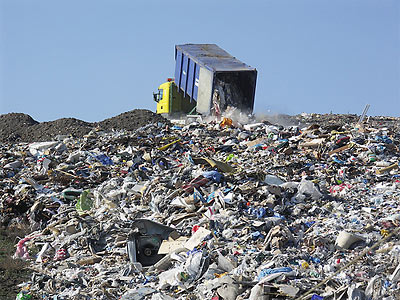
There truly is no way to reach a "zero waste" society because it is not environmentally or economically feasible. That being said, landfills, which are our primary waste disposal methods, cause some serious problems for their surrounding environment. For one thing, the emissions to the atmosphere are problematic, because they release high amounts of dust, aerosols and potentially toxic gases. Also, because many landfills reside on top of some sort of water supply, it seeps down and creates potential issues with the water. A somewhat indirect consequence is that 80% of the total waste ends up being dumped into the oceans anyway, which is a pretty staggering statistic. The ocean is incredibly vast, sure, but dumping all that waste will have long-term effects that will manifest at some point during our existence. It's hard to imagine alternatives to landfills, though, because not everything can be recycled or composted. We can't make waste disappear, so technically there is not much we can do at this point to eliminate the problem. People that live near landfills may complain about the odor, but how could we make people care about this problem? The solution is out there somewhere, but it may be economically and technologically way down the road.
More than Raising Awareness
Ultimately, the message of the Toxic Tourism book was for these "toxic tours" to do more than just raise awareness of a pressing and oftentimes harmful truth about a specific environment. Yes, raising awareness is the first step in any issue that is to be addressed, but what good is raising awareness when nothing is done after the awareness is raised? This reminds me of the comment that Nate made about his Toxic Tour experience that he had last year. They went to the site, they learned of the damage that had been done, but after that, they simply left with that knowledge, but did nothing to actually help the cause, which makes you ask yourself why you even went there in the first place. This truly reminds me of our final capstone projects. For me, I feel as if raising awareness about pregnancy discrimination is useful, yet very easy. It does not take much to throw together a few eye-popping statistics to raise that awareness. (Which is important) But I think the goal is to not only raise awareness, but inspire change. Now, that is not going to be so easy with both a male population that physically cannot get pregnant and young college students who hopefully will not be having children any time soon, but I guess what I am trying to say is I want people to watch my video, and not necessarily inspire change, but I want them to be moved and in some way effected by it, which is, in essence, what a good toxic tour should do. The video I have shown on this post does exactly what a serious problem, like a drought, should not do. The person speaking is simply throwing out a bunch of alarming statistics, but not once does he offer a solution. What good is that?
Tuesday, March 15, 2011
Envt Campaign- B.E.A.C.H. #3
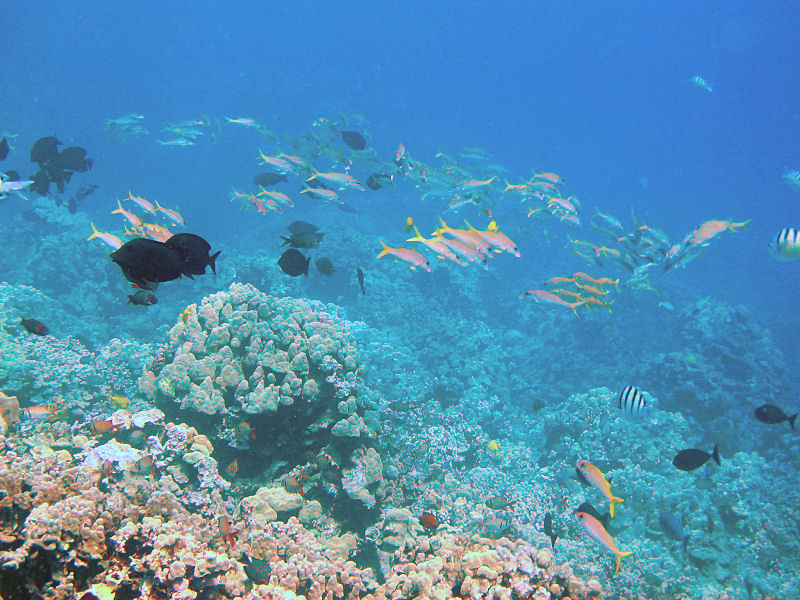
#3. The environmental campaign that I am going to evaluate is called the B.E.A.C.H., or the Beach environmental awareness campaign Hawaii. Basically, this organization is a non-profit entity that raises awareness and offers some solutions to combat the problem of debris that is found on many of the Hawaiian beaches. I think it is definitely a step in the right direction that the organization is actually offering up solutions as opposed to just raising awareness, but what I am going to focus on is how the website is constructed aesthetically, which essentially constructs an imagined community, which Toxic Tourism frowns upon and discourages. One need not even read the description of the organization to get a sense of the fact that this so called organization seems more pleasurable and vacation-like than anything else. Beautiful blue water and sea creatures splash right across the top of the page, and right away, at least in my opinion, I get the impression that this is more of a vacation website than an organization fighting for the lives of these animals. It almost has a seaworld feel to it, where the animals are to be looked at, rather than helped. Right off the bat this goes against one of the aspects of effectiveness that is talked about in Toxic Tourism. Instead, the website should be less touristy looking and more geared towards sharing the pain of others, in this case, the others being the animals,rather than glorifying their image. Hence, an imagined community is formed. The image up top is almost a spitting image of the one that is displayed across the webpage for the Hawaiian organization.
http://www.letsgo-hawaii.com/captcook/captcook1206_47b8.jpg
Quiz 5: Additional Post

Study: Most Plastics Leach Hormone-Like Chemicals
by JON HAMILTON
March 2, 2011
Most plastic products, from sippy cups to food wraps, can release chemicals that act like the sex hormone estrogen, according to a study in Environmental Health Perspectives.
The study found these chemicals even in products that didn't contain BPA, a compound in certain plastics that's been widely criticized because it mimics estrogen.
Many plastic products are now marketed as BPA-free, and manufacturers have begun substituting other chemicals whose effects aren't as well known.
But it's still unclear whether people are being harmed by BPA or any other so-called estrogenic chemicals in plastics. Most studies of health effects have been done in mice and rats.
The new study doesn't look at health risks. It simply asks whether common plastic products release estrogen-like chemicals other than BPA.
The researchers bought more than 450 plastic items from stores including Walmart and Whole Foods. They chose products designed to come in contact with food — things like baby bottles, deli packaging and flexible bags, says George Bittner, one of the study's authors and a professor of biology at the University of Texas, Austin.
Then CertiChem, a testing company founded by Bittner, chopped up pieces of each product and soaked them in either saltwater or alcohol to see what came out.
The testing showed that more than 70 percent of the products released chemicals that acted like estrogen. And that was before they exposed the stuff to real-world conditions: simulated sunlight, dishwashing and microwaving, Bittner says.
"Then, you greatly increase the probability that you're going to get chemicals having estrogenic activity released," he says, adding that more than 95 percent of the products tested positive after undergoing this sort of stress.
But what about all those products marketed as BPA-free? That's a claim being made for everything from dog bowls to bento boxes these days.
The team concentrated on BPA-free baby bottles and water bottles, Bittner says, "and all of them released chemicals having estrogenic activity." Sometimes the BPA-free products had even more activity than products known to contain BPA.
The testing didn't show which chemicals are to blame, which is likely to be frustrating to manufacturers.
But Bittner says consumers should be encouraged that at least some plastic products had no estrogen-like activity. He says that shows it is possible to make these products.
Early reaction to the study was mixed. Some scientists wondered about the test's reliability. Others noted that wine and many vegetables also can act like estrogen. And a few observed that Bittner has a financial interest in the testing lab and in a company involved in making plastic products that don't release estrogenic chemicals.
On the other hand, groups that have warned about the potential dangers of BPA in the past seemed to welcome the new research.
"This is really helpful because they took a look at very common products," says Sonya Lunder, a senior analyst at the Environmental Working Group.
But the results suggest that concerns about plastics can't be solved by worried consumers at the checkout counter, Lunder says. It's a problem for government, she says.
"Regulatory agencies need to study the effect of chemicals leaching out of plastic," Lunder says, adding that an EPA program formed more than a decade ago to do this sort of research still hasn't produced many results.
Until scientists come up with more definitive answers, Lunder says, worried consumers can follow the old advice to avoid putting those baby bottles and other plastic products in dishwashers or microwaves.
"We've long cautioned consumers to avoid extreme heat and cooling for plastics, to discard scratched and worn plastics and we feel like this [study] validates one of our many concerns," she says.
-------------------------------------------------------------------------------------
(Article and Picture from http://www.npr.org/2011/03/02/134196209/study-most-plastics-leach-hormone-like-chemicals)
-------------------------------------------------------------------------------------
I vaguely remember the topic of BPA coming up in class a while ago. I thought that this article was interesting. I also, followed some links on the NPR webpage and found a brand of water bottle called PlastiPure. Their website employs rhetoric that is similar to that of a toxic tour in order to sell their protects. According to their website, one goal of PlastiPure is to educate "consumers on the facts about estrogenic activity (EA) by working directly with the scientific community, non-governmental organizations, consumer groups, legislators, and the media."
(http://plastipure.com/about)
Brian Goldenberg
Intervention -- Official Chernobyl Tours

12:11 21/01/2011
RIA Novosti commentator Marina Selina
Can Chernobyl become a popular tourist destination? The Ukrainian government thinks so. It plans to offer regular tours to Chernobyl, and hopes to attract more than just extreme tourists looking for an adventure. Eschatologists and anyone longing for a taste of the Soviet past are also welcome.
Ukrainian tour operators are anticipating a healthy flow of tourists, but it is too early to tell if this notorious disaster site has the makings of tourist attraction. Many questions remain. Can visitors' safety be guaranteed? Will the massive investments needed in infrastructure materialize? While we wait for those answers, nature is gradually reclaiming this impressive site where time stood still.
Chernobyl's prospects
Those who visit Chernobyl today say it's like travelling back in time. Within a few hours of the explosion at the Chernobyl nuclear plant in April 1986, the government evacuated all 50,000 residents of the neighboring town of Pripyat. The abandoned streets, schools, and Soviet-era department stores have remained intact in the intervening 25 years. Tour operators expect that this ghost town frozen in time and the wreckage of the reactor encased in a concrete sarcophagus will make an indelible impression on tourists.
Tourism in Chernobyl is not an entirely novel ideal; several tour operators already offer excursions to the area. But now it has attracted the attention of the government, and that could make a huge difference.
Last December, Ukraine's emergencies minister, Viktor Baloga, who accompanied Helen Clark, chief of the UN Development Program, on her visit to Chernobyl, proposed that regular tours to Chernobyl begin in January 2011. Ms. Clark supported the idea, seeing it as an excellent opportunity to raise awareness of the tragedy and of the importance of nuclear safety. She could see the economic potential of Chernobyl despite - or because of - its bleak history.
The UN official does have a point. In 2009, Forbes rated Chernobyl the world's most exotic tourist destination. It drew some 7,000 visitors that year.
As the host of the 2012 UEFA European Football Championship, Ukraine is preparing for an influx of international tourists. It is these tourists that Ukraine hopes to entice with trips to Chernobyl.
Ukrainians themselves have little interest in visiting the disaster site. "The majority of people here are more concerned about practical issues, such as benefits for the rescuers and the victims of the accident," says Ukrainian political analyst Alexei Poltorakov, who sees foreigners and young people who are into extreme tourism as the target market.
-------------------------------------------------------------------------------------
(Article and Picture from http://en.rian.ru/analysis/20110121/162233898.html)
-------------------------------------------------------------------------------------
Toxic tours of Chernobyl have the potential to make tourists aware of the importance of nuclear safety by providing visitors a first hand encounter with Chernobyl, the most striking example of nuclear energy gone wrong. Unfortunately, based on the description of the article, I am inclined to believe that the main reason that the Ukrainian government put together an official Chernobyl tour was to generate profit for the region. As a result, the Chernobyl disaster is exoticized as an eerie relic from the Soviet Union of old. Exoticizing Chernobyl is exactly the opposite of what Pezzullo would recommend. Rather than constructing an imagined community to whom visitors can identify, exoticizing these events causes visitors to disassociate. One way to remedy these issues is by appointing tour guides who are Chernobyl survivors. This would allow the tragedy of Chernobly to be told from the perspective of a personally narrative, rather than as an historical event.
Brian Goldenberg
Quiz #4- Related to TT
I recently watched The Cove and was very moved by the work of Louie Psihoyos and his team in exposing the dolphin massacre that is taking place in Japan. Toxic Tourism speaks to a lot of these grassroots campaigns, like The Cove, and asks whether tours are even that effective with such high-quality, informative videos taking over in the world of activism. Is this wave of exposing-documentary work more effective than the toxic tours? Some would say, yes. On the other hand, can one truly experience the an environmental issue to the fullest extent through film alone? No. Obviously a first hand experience of a toxic tour would help someone be able to sense all the environmental degradation around them (the smells, sights, tastes, etc). Clearly, toxic tours are limited to the population that can participate in them and afford to travel and go on them. Films, on the other hand, can be shared and have a wider viewing potential. Pezzullo says in Toxic Tourism that the combination of tours, films, and interviews are the BEST way to may a lasting impression on people and encourage others to act.
Quiz #3- Example of an Imagined Community
The Slow Food Movement has trickled down as an environmental campaign for cleaner food in our agricultural industry. According to the Slow Food Movement, “clean” food aims to promote sustainability for the earth. The definition of sustainability focuses on respect for the environment at all levels of the food industry, from production to distribution. “In order to be able to judge the sustainability of food products, we need to know the ecological consequences of the actions carried out from the land to the table” (Petrini 115). “Good” food is not always “clean” food. A crate of organic tomatoes from Mexico are less environmentally sustainable than a loaf of bread made at a local bakery down the road. With the inclusion of transportation and distance between point A (production) and point B (distribution), “clean” food must have the shortest journey and use minimal amounts of resources to get to it’s final destination.
As seen through the lens in Toxic Tourism, the Slow Food Movement does a successful job of establishing imagined communities. Through membership in Slow Food “clubs”, which are found in every major city and most countries around the world, participates “reshape at the macropolitical (global) and mircropolitical (cultural) levels of everyday existence” (Pezzullo 143). In utilizing the political sphere of imagined communities, the Slow Food Movement has used modern technology (websites, videos, books on Kindles, etc.) to parlay the movement forwards. Slow Food “clubs” coordinate online and meet up for social events at environmentally friendly restaurants and farmers’ markets. The “identity” of someone who supports “clean” food is that of someone who takes interest in the earth, their health, and limiting harm from their everyday life. The created stereotype of a Slow Food follower is the cultural thread that ties together this imagined community around the world.
According to the Slow Food Movement theory, environmental sustainability is the ultimate goal. This goal cannot be reached when food around the world is still being left to unsustainable models of production and distribution. While the Slow Food Movement works to connect the consumer to the product, the theory cannot leave out the most important element of food production; the farmers who produce the world’s food. Unfortunately, there has become a disconnect between the farmer and their products. To ensure our food is “good” and “clean”, we must support food that is also “fair" for the environment.
Sources:
Pezzullo, Phaedra C. Toxic Tourism: Rhetorics of Pollution, Travel, and Environmental Justice. Tuscaloosa: University of Alabama, 2007. Print.
Petrini, Carlo. Slow Food Nation: Why Our Food Should Be Good, Clean, and Fair. New York: Rizzoli Ex Libris, 2007. Print.
As seen through the lens in Toxic Tourism, the Slow Food Movement does a successful job of establishing imagined communities. Through membership in Slow Food “clubs”, which are found in every major city and most countries around the world, participates “reshape at the macropolitical (global) and mircropolitical (cultural) levels of everyday existence” (Pezzullo 143). In utilizing the political sphere of imagined communities, the Slow Food Movement has used modern technology (websites, videos, books on Kindles, etc.) to parlay the movement forwards. Slow Food “clubs” coordinate online and meet up for social events at environmentally friendly restaurants and farmers’ markets. The “identity” of someone who supports “clean” food is that of someone who takes interest in the earth, their health, and limiting harm from their everyday life. The created stereotype of a Slow Food follower is the cultural thread that ties together this imagined community around the world.
According to the Slow Food Movement theory, environmental sustainability is the ultimate goal. This goal cannot be reached when food around the world is still being left to unsustainable models of production and distribution. While the Slow Food Movement works to connect the consumer to the product, the theory cannot leave out the most important element of food production; the farmers who produce the world’s food. Unfortunately, there has become a disconnect between the farmer and their products. To ensure our food is “good” and “clean”, we must support food that is also “fair" for the environment.
Sources:
Pezzullo, Phaedra C. Toxic Tourism: Rhetorics of Pollution, Travel, and Environmental Justice. Tuscaloosa: University of Alabama, 2007. Print.
Petrini, Carlo. Slow Food Nation: Why Our Food Should Be Good, Clean, and Fair. New York: Rizzoli Ex Libris, 2007. Print.
Quiz 5- Random post_Heidi LAcks
Cycling to work may seem the healthy option, but a study has shown that people riding in cities inhale tens of millions of toxic nanoparticles with every breath, at least five times more than drivers or pedestrians.The research involved fitting cyclists with devices that could count the particles, mostly emitted by car exhausts, in the air they were breathing.It showed that urban concentrations of nanoparticles, which measure just a few millionths of a millimetre, could reach several hundred thousand in a cubic centimetre of air.The particles, when inhaled, have been linked to heart disease and respiratory problems.Because they are exerting themselves, cyclists breathe harder and faster than other road users. The study found that they suck in about 1,000 cubic cm with each breath, meaning they may inhale tens of millions of the particles each time they fill their lungs, and billions during a whole journey.
For cyclists and other road users, the key question is what the health impact might be of inhaling so many particles.
New techniques for gathering and analysing data mean, however, that the health problems caused by particulates are emerging much more quickly.A study carried out in London, to be published soon in the journal Epidemiology, is expected to show that exposures to high concentrations of nanoparticles are associated with a higher risk of heart disease. It will also show an association between larger particulates and respiratory health.Other studies have shown that exposure to particulate pollution can have rapid short-term effects too — such as provoking asthma attacks.
In a 2007 study, published in the New England Journal of Medicine, researchers at Imperial College London asked 60 people with mild or moderate asthma to walk along the western end of the busy Oxford Street in central London, where only diesel-powered taxis and buses, plus cyclists, are permitted. The volunteers suffered asthma symptoms such as reduced breathing capacity and lung inflammation.
Diesel vehicles emit far higher levels of pollutant nanoparticles than petrol engines.
What alarms health researchers is that such particles are so small that they penetrate the lungs and circulate in the blood. They are then thought to accumulate in organs such as the heart and brain and cause inflammatory reactions.
In some way this creates an imagined community, because it causes us to associate ourselves with this whether we have asthma or know someone with asthema. Because people may be aware of these potential risks, this creates an imagined community. This is definitely something that grabbed my attention because I not only suffer with asthma, I ride my bike and am outside all of the time, therefore I am going to be alarmed by this.
Intervention
Eliminating toxic fumes in Carver Daycare Center
EVANSVILLE, IN (WFIE) - After investigators discovered a toxic fume at Carver Daycare Center last month, they have been working to find a solution. Now they have come up with a mitigation plan, and parents are saying they feel relieved.
Kataka Milon's two children and nephew had been going to Carver for more than a year before it shut down last month.
Milon says, "When they told us it was something in the air, I was kind of freaked out about it, thinking how could the state let something this slip under the radar."
High levels of the chemical TCE were discovered after a voluntary testing by the building's former owner, a motor manufacturing company.
TCE is a metal cleaner, and it can cause anything from memory loss to nausea.
A participant in the VRP program has hired a consulting firm that's recommending a mitigation system that would take the fumes coming from the ground, and route them outside.
Amy Hartsock with the Indiana Department of Environmental Management (IDEM) says, "Once they've installed that, they'll do some additional sampling and make sure it is effectively reducing those levels to where they need to be. Then, everyone can be assured that there's not going to be any possibility of exposure for the children that come to the daycare."
Carver Daycare served 112 low-income families at the time it closed. Other daycare's have opened their doors to the children, but families say it's been difficult.
Milon says, "We were all left to scramble to find accurate daycare for kids, which made it hard on us. As a parent, you just don't want to just send your child anywhere."
If the consultant's plan is approved by the state, it calls for at least a seven week installation. The state says they'll be reviewing the plan for the next couple of days before signing off on it.
At this point, we don't have a price tag on the project, but we will keep you updated as soon as we know.
This shows that certain environmental interventions can be helpful. This is an example of how people come together to improve our environment.

Quiz 5 - Intervention
Plenty of kids in the United States grow up with some form of asthma, whether it be mild, occasional, or potentially life-threatening. One particular intervention went into an environmentally degraded inner city neighborhood and sought to help young children with asthma. The surrounding allergens, pollution and smoke exacerbated their asthma symptoms, so this intervention group stepped in to help. This instance somewhat creates an imagined community, because it causes us to connect at a certain level, whether we have asthma, know someone with asthma, or live by/drive by inner city neighborhoods. Some people may not be cognizant of such poor living conditions and the potential health risks, so in that regard it does create an imagined community. Whether this pulls us in or not is to be determined, but I would say it draws me in because I live with exercise-induced asthma. I know how sensitive certain fumes, allergens, and toxins can be to my breathing, especially during an athletic event. The study showed improvement while under treatment, while also showing improvement up to a year after treatment (relative to the control group, who experienced less improvement). This shows that certain environmental interventions can be beneficial, albeit on a small scale. The goal is to get people all working towards the same goal, which is vastly improving our environment. The difficult thing is to make people care about it, but it will take many small steps such as this one.

Sunday, February 27, 2011
CHCF
Coalition for the Homeless of Central Florida is dedicated to serving homeless people through transitional housing, providing food, offering children services, etc. They stay connected to those interested in helping by having pages on social networks such as Facebook, Twitter, Youtube, etc. Last year they released a video on their Youtube page that highlighted the lives of either currently or previously homeless people. The video has an emotional appeal, and was able to garner some media attention in Winter Park. However, the video only has a little over 800 views, meaning they did not broadcast it enough. It is tough for activist groups to get the attention of large communities, because it is tough to make people care, period. People are all fully capable of caring about seriously important issues, it just has to be presented in an attractive way, such as this video. Activist groups are great, but it is hard for them to have a global impact, especially an eradication of sorts. I think the best thing activist groups can do, though, is to stay connected through media outlets and be open to the ideas of their online communities.
Quiz 4
After the deep-water oil spill caused by British Petroleum (BP) in April of 2010, the image of the oil business (especially that of BP) was deeply tarnished. Starting in September of 2010, British Petroleum began releasing public service announcements about locals effected by the oil spill, and how BP "made things right". While one of the purposes of this campaign was to show people that it was safe to go back to the waters of the Gulf of Mexico, its main agenda was revamping BP's public image.
These advertisements, while effective because they target the individual are very illegitimate because they don't tell the whole truth. There are still thousands of workers who are now jobless, and poor due to the oil spill. Below are a few examples of these advertisements made by BP. Anyone can make their own judgment on these videos, however I find it pretty hard to see right through the phoniness of it all. While this strategy may be the best idea for British Petroleum, it will never be forgotten that this is the same company that harmed the gulf. This makes these advertisements somewhat of a waste of time. A better idea for British Petroleum would be to financially back a more local conservation group working to protect those effected by the oil spill.
These advertisements, while effective because they target the individual are very illegitimate because they don't tell the whole truth. There are still thousands of workers who are now jobless, and poor due to the oil spill. Below are a few examples of these advertisements made by BP. Anyone can make their own judgment on these videos, however I find it pretty hard to see right through the phoniness of it all. While this strategy may be the best idea for British Petroleum, it will never be forgotten that this is the same company that harmed the gulf. This makes these advertisements somewhat of a waste of time. A better idea for British Petroleum would be to financially back a more local conservation group working to protect those effected by the oil spill.
Coalition of Immokale Workers

From the "CIW" website: The Coalition of Immokalee Workers (CIW) is a membership-led farmworker organization of mostly Latino, Haitian and Mayan Indian immigrants working in low-wage jobs throughout the state of Florida. We have been organizing in the town of Immokalee since 1993 and have a base of nearly 4,000 members.
The CIW has two primary campaigns. Our Campaign for Fair Food seeks to improve wages and working conditions for Florida tomato pickers by calling on major buyers of tomatoes to pay a premium of one penny more per pound for their tomatoes, ensure that this penny is passed down directly to farmworkers, and work together with the CIW to establish and implement a code of conduct in their supply chains.
Our Anti-Slavery campaign is an effort to put an end to the continued existence of modern-day slavery in the agricultural industry. To date, we have worked together with the Department of Justice and the FBI to uncover, investigate and federally prosecute seven cases of modern-day slavery in Florida’s fields. We are founding members of the national network to end modern-day slavery, the Freedom Network USA, and through the Freedom Network Training Institute (FNTI), we also train law enforcement and NGOs on how to eliminate forced labor in their communities."
The CIW's Campaign For Fair Food has resulted in changes within McDonalds, Burger King, Subway, grocery marts and the food service industry for the betterment of not only better quality food, but better treatment for farmers. By protesting and raising awareness of the negative corporate influence on farms and subsequently the treatment of the farmers, the Coalition of Immokalee Workers are actively changing how large companies raise food and treat workers. Increasing workers wages and fighting for Code of Conduct policies for agricultural suppliers are both benefits that would never have been achieved if the CIW and their Campaign for Fair Food didn't reach out to thousands of people via the blogosphere. The internet has enable the group to be mobilized in numerous cities, placing pressure on companies at not only their headquarters but at various events all over the country. Without the internet, this campaign would never have reached the amount of people it currently attracts.
FWAF
The Farmworker Association of Florida’s long-standing mission is to build power among farmworker and rural low-income communities to respond to and gain control over the social, political, workplace, economic, health, and environmental justice issues that impact their lives.
The Farmworker Association of Florida was founded in 1983 in response to devastating freezes decimating the citrus crop in Central Florida and impacting farmworkers’ livelihoods. The organization incorporated in 1986 and expanded statewide in 1992. FWAF now has five offices in diverse agricultural communities in Florida and organizes and outreaches to farmworkers in 15 different counties in the state. FWAF’s policy change efforts over the years have improved living and working conditions for Florida’s estimated 300,000 farmworkers, and include passage of the historic Florida Right to Know Act, among other successes.
FWAF media use of blog posts, audio podcasts and videos the organization is able to share multiple trainings and programs that compliment their hard work and all that they have achieved to become successful. Below is a list of different programs and trainings FWAF has done to be obtain their ultimate goal in order to be a successful organization.
1. Pesticide Health and Safety Trainings for Farmworkers Pesticide Exposure Recognition
2. Diagnosis and Treatment Trainings for Health Care Providers at Migrant Clinics
3. Advocacy for Policy Change to Improve Farmworkers Living and Working Conditions
4. Community-based, participatory research projects on farmworker health
5. Immigrants’ and Workers’ Rights Advocacy
6. Vocational Rehabilitation for Farmworkers
7. Education and Peer Support for Pregnant and Post-partum low-income, minority women
8. Disaster Preparedness and Relief
9. YEP- Youth Empowerment Program - HIV/AIDS Education and Prevention for Hispanic and Haitian Youth
10. Education and Empowerment for Latino Small Farmers Leadership Development
11. Outreach to and Collaboration with Student and Youth groups to raise awareness about farmworker issues.
The Sea Shepherd Conservation Society
The Sea Shepherd Conservation Society is a group that operates in Antarctica. Their purpose is to stop Japan's whaling operations. For quite a while, Japan has been killing whales "for scientific purposes." Recently, the Japanese government has suspended their whaling operations as a result of the efforts of the Sea Shepherd Conservation Society. The Sea Shepherd Conservation Society successfully used an unusual media campaign strategy to spread word of their cause. Unlike traditional activist group who attempt to gain media exposure through protests or rallies, the Sea Shepherd Conservation Society was featured in a running series on Animal Planet called Whale Wars.
Saturday, February 26, 2011
FOE- Friends of Earth
Friends of Earth is a community activist group that was formed in an effort to defend the planet and strives for more awareness towards a more just and healthy world. It seems like one of their more significant media campaigns as of recent was that they were seeking to put an end to the approval of genetically engineered salmon that is used for human consumption. They brought in a man named Eric Hoffman, a bio-tech policy campaigner, who spoke in front of the White House in Washington, D.C. The fact that they were protesting in front of the White House would lead me to believe that it was a successful campaign. Some of the limitations this campaign might have, as well as most if not all other campaigns, is that halting this approval will wind up costing money to some organization, and sadly, whenever money is involved, it tends to blind people from doing what is right.
Friday, February 25, 2011
CBE
CBE, Communities for a Better Environment, is a non-profit organization founded to improve public health and achieve environmental justice. It is active in Northern and Southern California, where the pollution seems to be the worst in all of the country. This organization brings people on toxic tours (just as is stated in our book) and uses these to try and make people better understand the problem (of our polluted environment).
Through CBE’s media use of blog posts, audio podcasts, and videos the organization sheds light on the activists and grassroots organizations that are working to transform this challenge – “increasing access to housing, food, and water; supporting indigenous communities; building a green collar economy; and, with optimism and creativity, striving vigorously and resolutely for environmental justice for all.”
Executive Director, Bill Gallegos states that “the majority of these people living in these bad environments are people of color, or low income” and furthermore “every effort to rid these vulnerable communities of toxins literally saves lives.” Hence CBE has been highly successful in using the law as an instrument of social change. Additionally Gallegos details the struggle to instill a “crude cap” on Chevron’s oil refining process and the ways we can all participate in environmental activism is linked to an audio podcast on his website.
Of what I have read, there were no specific stats/facts that proved any ‘success’ in helping ‘these’ people but their blogs, audio podcasts and videos are certainly gaining recognition ‘at least’! In that sense it is successful but limitations do exist as they seem to exist in every activist environmental organization is truly making ‘that’ difference. As discussed in class something like this needs to reach, touch, affect somebody who has money and/or a great will to truly fight ‘against’ these companies that are releasing all of these toxins.
See their website at:
http://www.sundancechannel.com/thegoodfight/About
Thursday, February 3, 2011
Trix are for Kids
This here is an advertisement for Abercrombie and Fitch, which Klein specifically mentions as one of the companies to immerse themselves in the P.C. Marketing craze. This is a commercial about wrestling. What is interesting about this commercial is that it not only appeals to the homosexual community (even though I do not agree completely, wrestling has been labeled a somewhat homosexual sport), but on the flip side, wrestling can also be seen by some as being very masculine and macho. This not only appeals to the gay community, but it is not limited to just that specific identity.
The second video is the famous, "Trix are for Kids" video that has been around since the 80's, but not so much today. Regardless, this message is clearly targeting the kids market. This is significant because, as Klein states on page 119: "The message is clear: get the kids and you've got the whole family and future market." (Klein 119). In addition, reading a little further down the page, Elissa Moses, who is the senior VP of the advertising agency, said that the arrival of the global teen demographic was "one of the greatest marketing opportunities of all time." (Klein 119). Although there are many advertisement strategies geared toward adults, the fact of the matter is that kids are so easily influenced and so susceptible to advertising tricks that it would be crazy for these companies NOT to gear their advertising brands toward such a vulnerable population.
The similarities between these two constructions of identity is that they both target groups of the population that are very vulnerable, in a sense. Kids are vulnerable in that they simply do not know any better; they do not yet have the ability to look at an advertisement and afterward, say to themselves "this is a load of crap, this commercial is trying to trick me into buying their product." They simply see the advertisement and because "Trix are for kids," they feel they can identify with that, (because after all they are kids) and go out and convince their parents to buy the product. The gay community is vulnerable as well in the sense that they are still a "minority" in this population in terms of how many gay people there really are, and seeing tanned, sweaty, muscular men gives them not only an identity but something to aspire to as well. The differences between these two advertisements is that the Trix commercial is targeted more towards a specific demographic (kids), whereas the Abercrombie ad is targeted more towards a "lifestyle." Also, the Abercrombie ad could be geared towards not only gay men but masculine men who are very comfortable with their sexuality, but straight, whereas the Trix ad is targeted towards kids and only kids.
The second video is the famous, "Trix are for Kids" video that has been around since the 80's, but not so much today. Regardless, this message is clearly targeting the kids market. This is significant because, as Klein states on page 119: "The message is clear: get the kids and you've got the whole family and future market." (Klein 119). In addition, reading a little further down the page, Elissa Moses, who is the senior VP of the advertising agency, said that the arrival of the global teen demographic was "one of the greatest marketing opportunities of all time." (Klein 119). Although there are many advertisement strategies geared toward adults, the fact of the matter is that kids are so easily influenced and so susceptible to advertising tricks that it would be crazy for these companies NOT to gear their advertising brands toward such a vulnerable population.
The similarities between these two constructions of identity is that they both target groups of the population that are very vulnerable, in a sense. Kids are vulnerable in that they simply do not know any better; they do not yet have the ability to look at an advertisement and afterward, say to themselves "this is a load of crap, this commercial is trying to trick me into buying their product." They simply see the advertisement and because "Trix are for kids," they feel they can identify with that, (because after all they are kids) and go out and convince their parents to buy the product. The gay community is vulnerable as well in the sense that they are still a "minority" in this population in terms of how many gay people there really are, and seeing tanned, sweaty, muscular men gives them not only an identity but something to aspire to as well. The differences between these two advertisements is that the Trix commercial is targeted more towards a specific demographic (kids), whereas the Abercrombie ad is targeted more towards a "lifestyle." Also, the Abercrombie ad could be geared towards not only gay men but masculine men who are very comfortable with their sexuality, but straight, whereas the Trix ad is targeted towards kids and only kids.
Subscribe to:
Comments (Atom)